
UNESCO World Heritage · Rossatz-Arnsdorf
Discovering the Wachau from Rossatz
Forty kilometres of Danube between Melk and Krems, terraced vineyards, apricot orchards and villages that have barely grown since the Middle Ages. The Wachau has been on the UNESCO World Heritage list as a cultural landscape since 2000.
We live in the middle of it, on the right bank in Rossatz — and this page collects what is genuinely within reach from here.
Between Melk and Krems
The Wachau in brief
The Wachau lies between the towns of Melk and Krems on the Danube. What defines it is the narrowness: the river cut into the granite massif here, the slopes fall steeply, and the vines grow on terraces stacked by hand over centuries. The dry stone walls holding those terraces are themselves part of the World Heritage designation.
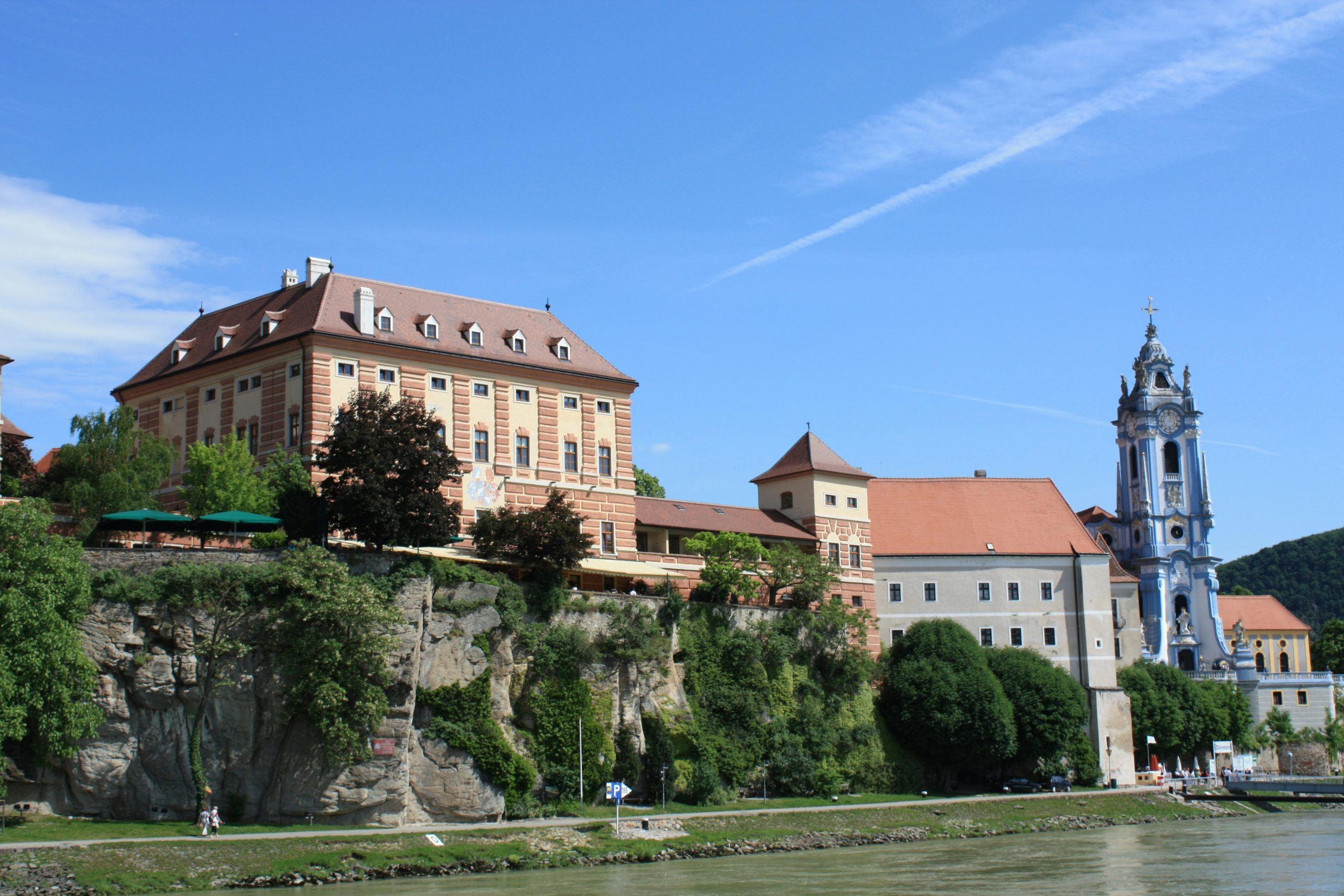
The right bank, where Rossatz sits, is the quieter side. Fewer coaches, less crowding, and the better view — from here you look across at Dürnstein with its castle ruin above the village.
The region is small enough that much of it opens up on foot or by bicycle, and large enough that a week is not enough. The Danube Cycle Path passes the house, the World Heritage Trail starts behind the garden, and the ferry puts you on the opposite bank in a few minutes.
For background: the Wachau as World Heritage and the World Heritage spots from Donau Niederösterreich explain what makes this landscape what it is.
Pictures from the region
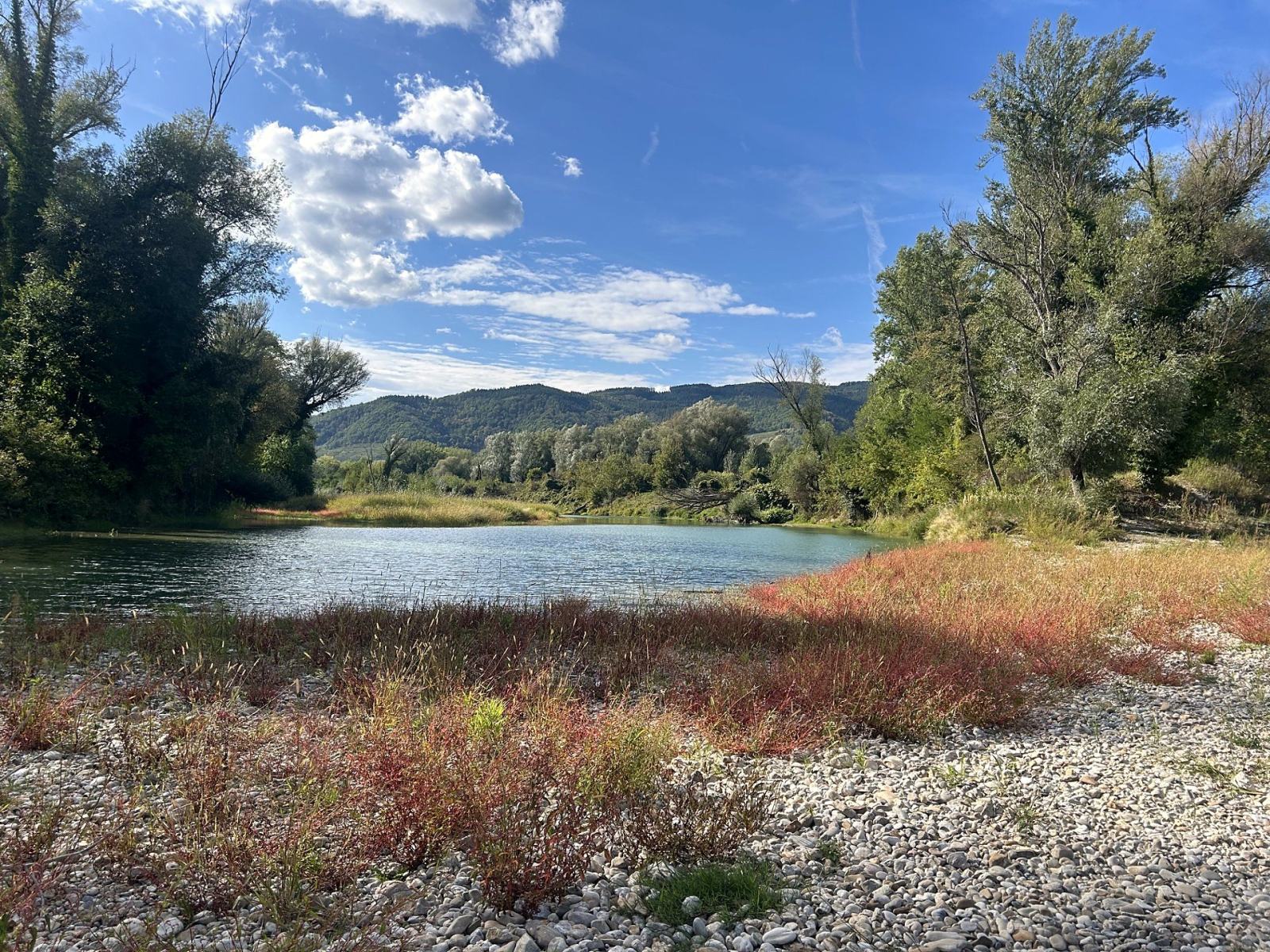
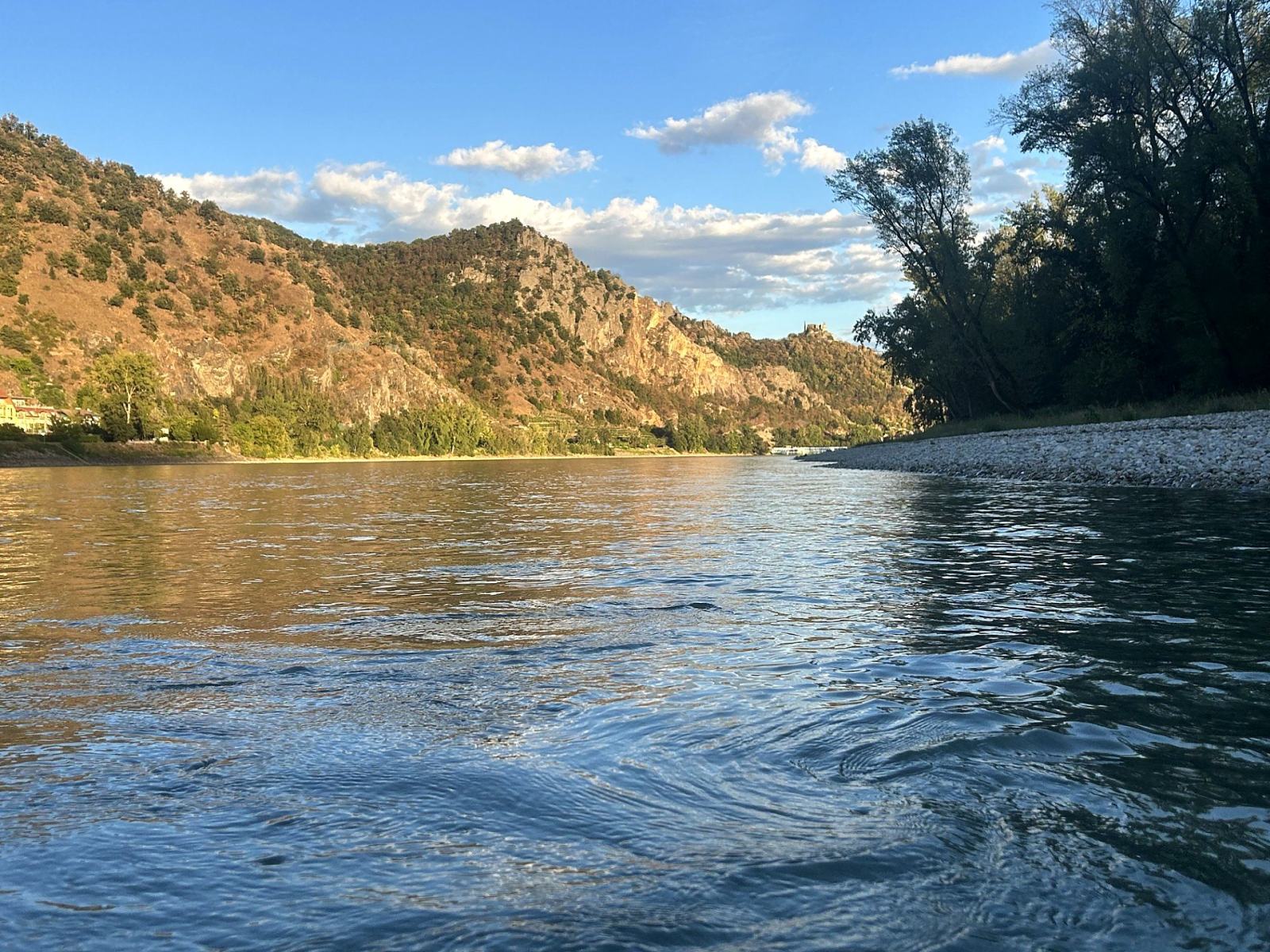
The Wachau in pictures
Four seasons
The year in the Wachau
The region changes with the seasons more than most holiday destinations do. Four windows worth planning around.
Apricot blossom in April
Around 100,000 apricot trees flower in the Wachau, usually between late March and mid-April. For two weeks the whole valley is white and pink. If you want to see it, book early — the blossom does not reschedule.
Summer on the Danube
The river beaches are ten minutes away on foot. Add wine taverns, concerts in castle courtyards and long evenings in the garden. From June to August the ferry to Dürnstein runs daily.
Wine autumn and apricots
Apricots ripen from late July; the grape harvest falls in September and October. Wineries open their courtyards and many villages hold wine-autumn weekends. The quietest and, for many, the finest season in the valley.
Winter and Advent
Winter is silent here. Small Advent markets in Dürnstein and Spitz, bare terraces in the mist, and walking trails you have entirely to yourself. Our lounge has the stove lit.
On foot and by bike
Walking and cycling
The Welterbesteig Wachau is the region's main long-distance trail: 180 kilometres in 14 stages, right around the valley, over vine terraces, through dry grassland and old village centres. The paths start immediately behind our garden — you can walk a stage and be back here in the evening.
For something shorter, Donau Niederösterreich lists circular and themed routes, including apricot and wine walks around Rossatz.
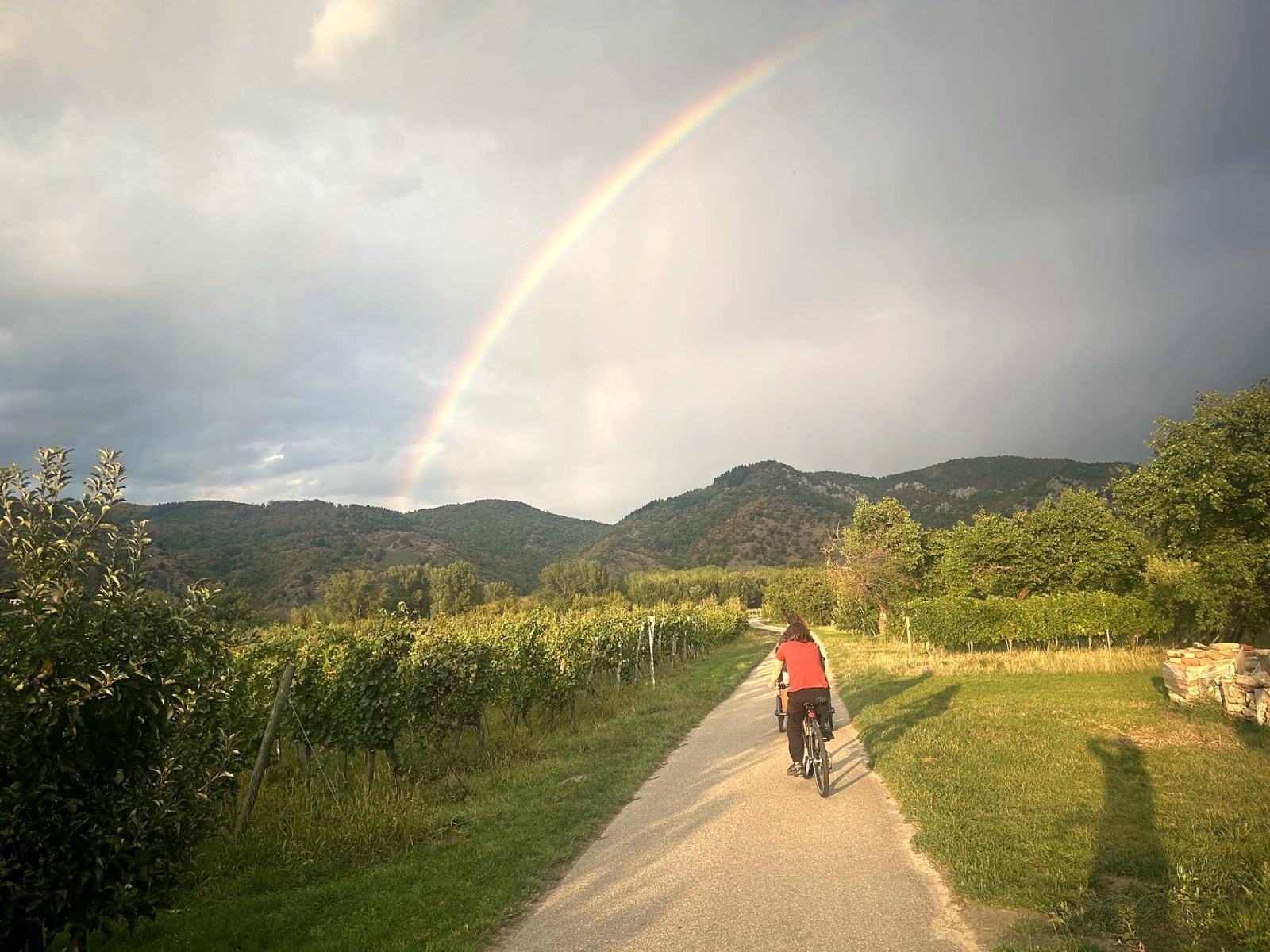
The Danube Cycle Path is one of Europe's best-known cycle routes and runs directly past the house. The stage overview helps with planning a day; the full Austrian route is documented there as well.
Useful for cycle tourers: Rossatz sits on the route itself, so you do not have to leave the path to reach your bed. Bicycles are stored locked and under cover.
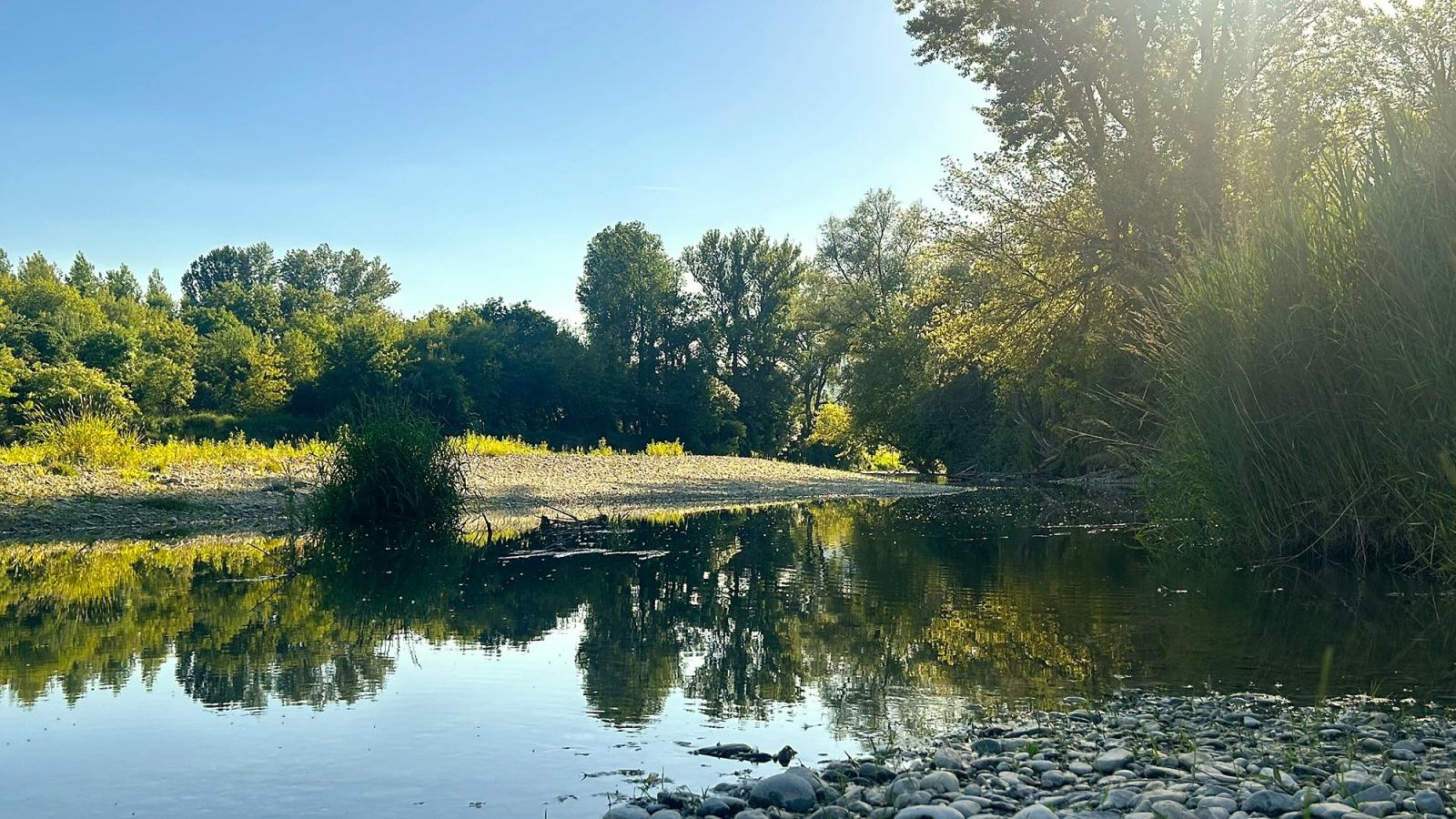
Across the river
On the Danube: ferries and boats
The Dürnstein–Rossatz motor ferry crosses to the far bank in a few minutes. The municipality publishes the timetable; further upstream the Weissenkirchen roll ferry also operates.
Both take bicycles, which makes a loop along both banks the obvious day out.
For longer trips on the river there are two operators: DDSG Blue Danube and Brandner Schiffahrt. Both run the Krems–Dürnstein–Spitz–Melk stretch, some sailings taking bicycles on board.
A full overview of connections is at Donau Niederösterreich, boats and ferries.
Food and wine
Wine, apricots and the table
Rossatz sits in the middle of the wine-growing area. Grüner Veltliner and Riesling define the Wachau, along with the classifications Steinfeder, Federspiel and Smaragd, which exist nowhere else. Several wineries in the village are within walking distance and pour in their own courtyards.
The wine taverns take turns with their opening weeks — which one is currently open is best asked of us, or found via the municipality's tourism pages.
The second speciality is the Wachau apricot, which carries a protected designation of origin; the difference from an ordinary apricot is not subtle. From late July they are sold fresh at roadside stands, and year-round as jam, nectar and brandy.
Food and addresses are collected at Lower Austria's Wachau pages.
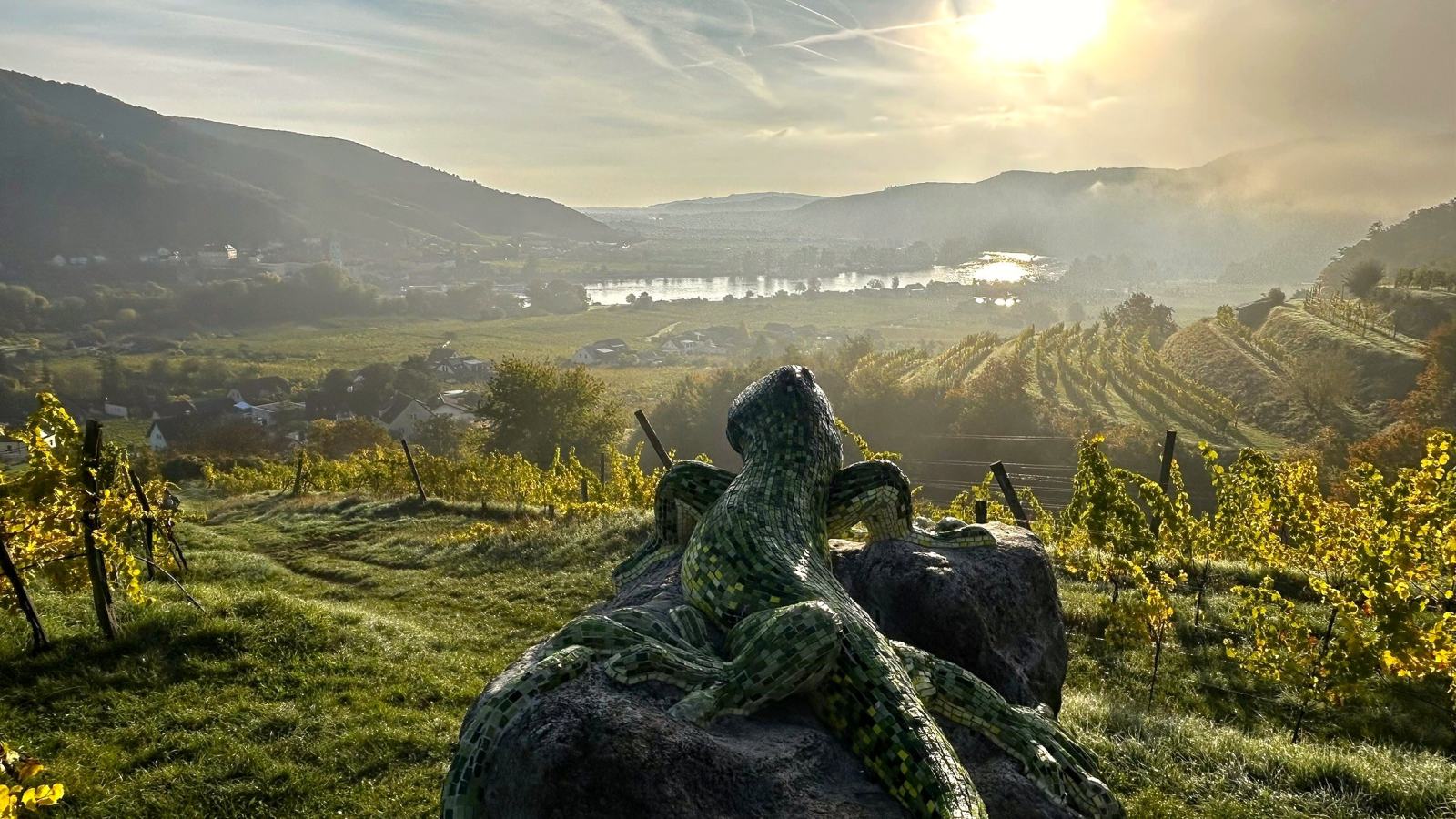
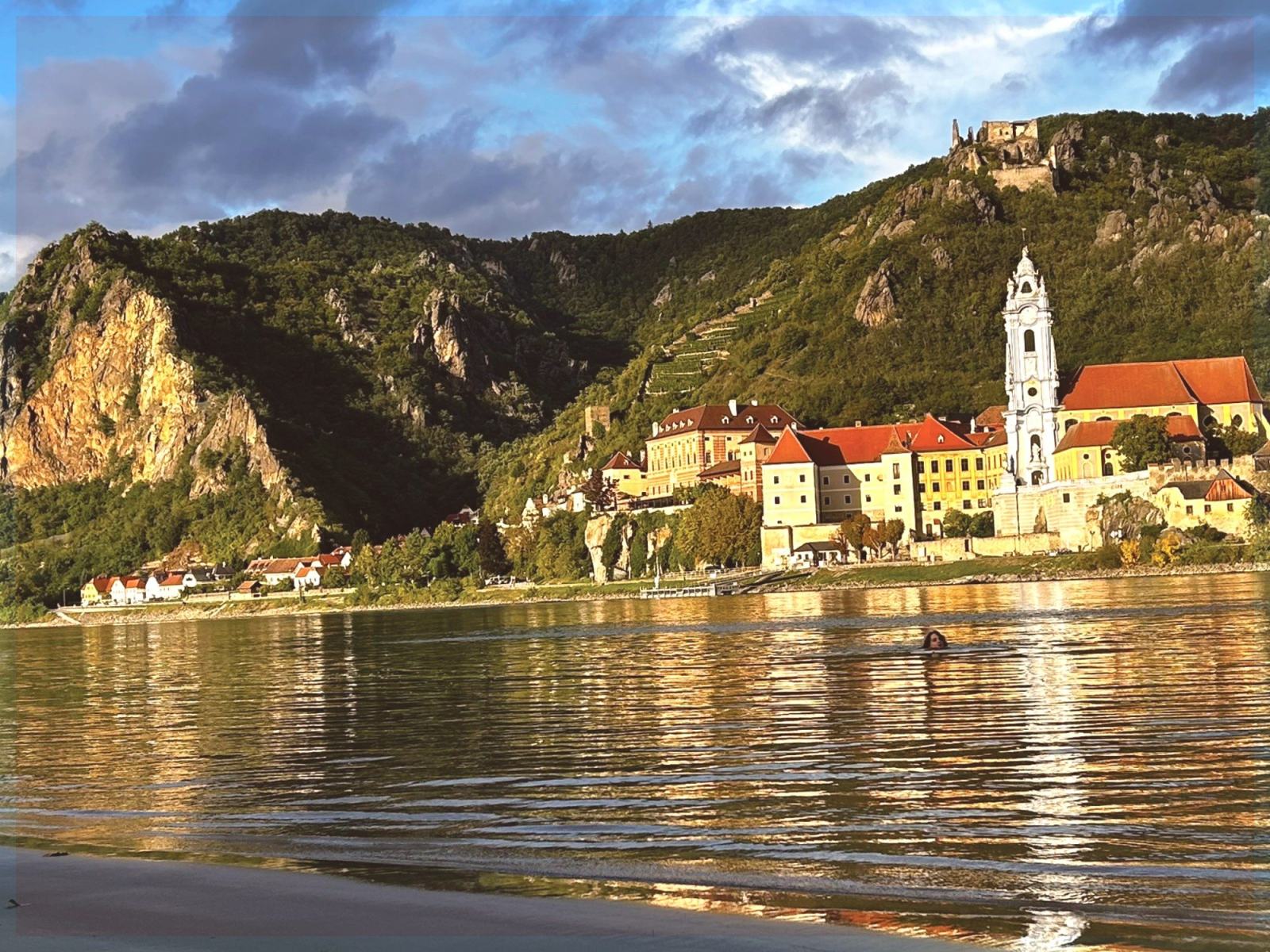
Dürnstein, Krems, Melk
Culture and days out
Directly opposite lies Dürnstein and the castle ruin where Richard the Lionheart was held prisoner in 1192–93. The climb takes about half an hour and pays out in the best view over the valley. Down in the village stands the blue tower of the abbey, the emblem of the Wachau.
Downstream is Krems with its old town and art quarter; upstream Melk with its Benedictine abbey above the town. Both are half an hour away, or a day trip by boat.
In between lie Spitz with its Tausendeimerberg, Weissenkirchen with its fortified church and Mautern with a Roman past — each an easy half day.
A curated overview of sights is kept by Lower Austria for the Wachau, with regional detail at Donau Niederösterreich for Rossatz-Arnsdorf.
Dates
Events in the region
Something is on almost every weekend in the Wachau — wine festivals, concerts, guided walks, markets. Two dates we want to point to right now:
Event in the Lower Austria calendar (226445)
Event in the Lower Austria calendar (235134)
The full picture of what is happening in the region is in the Lower Austria events calendar, which can be filtered by date and place.
And if you are staying with us and looking for something specific, ask. A good deal of what happens here never reaches a calendar.
Further reading
Tourism portals for planning
Donau Niederösterreich
The regional tourism board for the Wachau, Nibelungengau and Kremstal. Tours, stages, sights, timetables — the most complete source for the region. donau.com
Lower Austria Tourism
The state portal, strong on wine, food and World Heritage, and home to the state-wide events calendar. niederoesterreich.at/wachau
Rossatz-Arnsdorf municipality
Ferry times, village map, directions and local events straight from the municipality. rossatz-arnsdorf.at
Danube Austria
The umbrella brand for the entire Austrian Danube, with full documentation of the cycle path. donau-oesterreich.at
Everything within reach
From Rossatz
Everything on this page is within easy reach of the house. The walking trails start behind the garden, the cycle path passes the door, the ferry to Dürnstein is minutes away, and the river beaches are a ten-minute walk.
If you are not sure where to start, ask us when you check in. We live here, and we know the paths that are on no map.
Our three apartments: Accommodations
Getting here: Contact and directions
In the house: Yoga and Feldenkrais
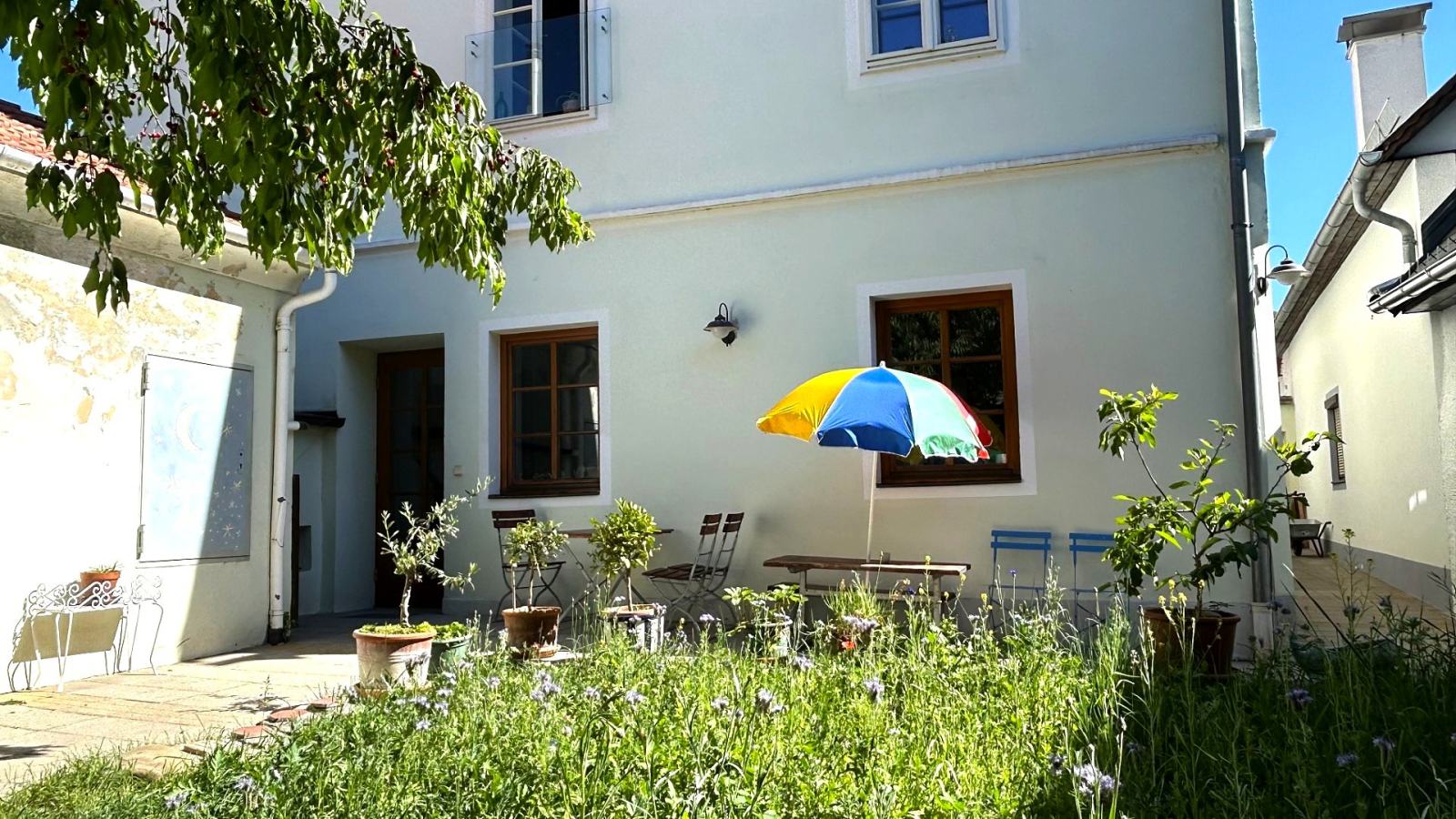
Frequently asked questions about the Wachau
When do the apricots blossom in the Wachau?
Usually between late March and mid-April, and the blossom lasts about ten days. The exact start shifts from year to year with the weather. The apricot orchards around Rossatz are among the largest in the Wachau.
When is the best time to visit the Wachau?
Spring for the apricot blossom, summer for the Danube cycle path and the river beaches, September and October for the grape harvest and young wine. Autumn is quieter than summer. In winter it is still.
Which cycling stages pass Rossatz?
The Danube cycle path runs along both banks. Rossatz lies on the right, southern bank, the quieter side with no main road. The classic day stage from Krems to Melk is around 40 kilometres and can be combined across the banks using the ferries.

